
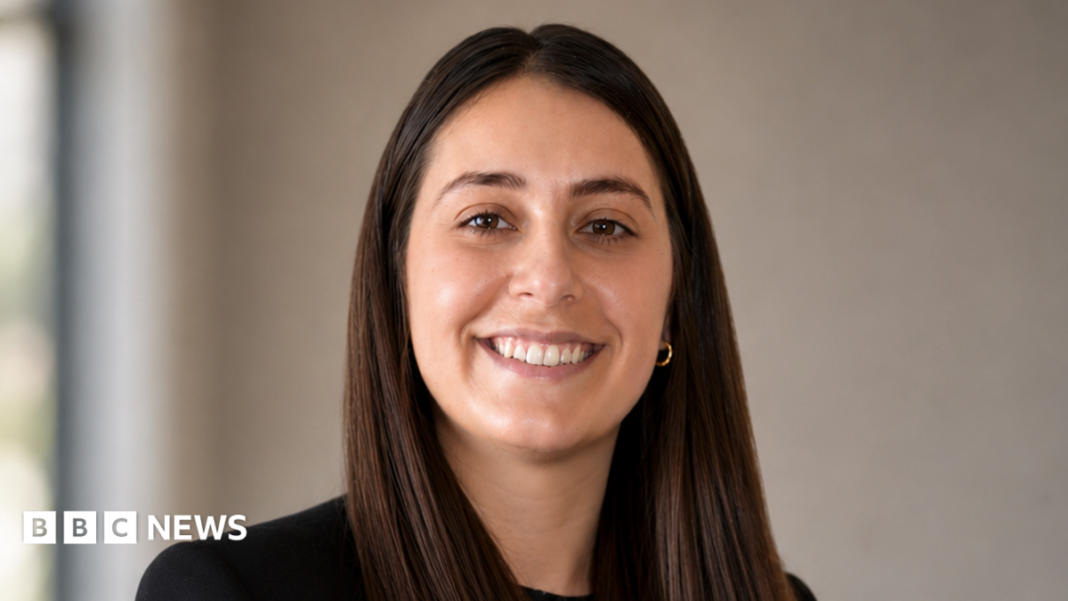
Aliev, who had worked in finance before doing her MBA, was wary of first impressions at the firm.
“If you judge a book by its cover, it’s very easy to be like ‘oh, young girl, Wall Street background, coming in here and telling me what to do’… I was really conscious about that,” she says. “And I really didn’t want to come off that way to my team.”
Aliev says her approach was initially to just observe and learn. “Not coming in and telling them ‘this is how things are going to be’.”
The practice of a young entrepreneur borrowing money to buy a company and become its boss is known as entrepreneurship by acquisition or “search-fund investing”.
The would-be business owner sets up a fund, called a search fund, and aims to attract money from both institutional investors and wealthy individuals.
At the last count, in 2023, a record 94 search funds, external were found to have been launched that year in the US, with $682m (£505m) said to have been invested in funds and the companies they bought across 2022 and 2023.
In turn, there are now investment companies in the US that specialise in backing young entrepreneurs and their search funds, such as Search Fund Partners, Aspect Investors and Anacapa Partners.
They are attracted by reported high rates of return. For while some people may question the wisdom of putting a 20-something in charge of an established business, a report by Yale School of Management found that “juicy returns by any standard”, external are available, and funds generally “remained relatively stable”.
For existing business owners, selling to a younger entrepreneur is a chance to move on and perhaps retire. For would-be company leaders the aim is to grow the business for perhaps five to 10 years, before selling at a profit.
Now more than two years since taking over at Life Support Systems, and 30-years-old, Aliev has led the takeover of a competitor, which she says has doubled the size of the business.
She says that this focus on growth has been welcomed by most employees. One, Meaghan Richardson, says: “It can be a little bit challenging sometimes for those of us who have been here a long time… but it’s been really great since she’s come in because she’s just turned a lot of stuff around, which is really exciting.”
But not everyone has been happy with Aliev’s new approach. Some workers have left and she has made others redundant as “they just didn’t want to work in a growth company”.
Elsewhere, entrepreneurship by acquisition can end in failure.
Scott Duncan, who gained his MBA from Harvard Business School, was back in 2018 seeking an established business to acquire and run. He secured investment to buy F&M Tool and Die, a company in Massachusetts that makes industrial parts.
It looked great on paper, and seemed to be a strong fit given his previous work in engineering.
Aged 31 when he took over the company, he said his first day was “terrifying”. “All of the employees had been doing this for decades. I was this newcomer and I had really no idea what was going on. So, they were really perplexed by me as well.”
Very quickly, things started to unravel in what would be a seven-year struggle to keep the business afloat.
Skilled employees left the business, including one who started a low-cost competitor and took an important customer with him. Others proved resistant to change, and Duncan realised it would be impossible to fill the previous owner’s shoes.
“This whole organisation had built up around him, his personality,” he says. “I bought a business that was very difficult for anyone except for that guy to run.”
After this difficult start, the Covid pandemic, the rise of cheaper Chinese competition and even a flooded workshop were among challenges in a battle for survival that lasted until 2025. Duncan describes it as “death by a thousand cuts”.
In February last year, he was left with little choice but to shut the business down. “I brought everybody into the conference room. I had to grab a chair and sit down in it because I was physically unable to stand. I thought I was going to pass out, but all the employees came in and I said, ‘we’re shutting the doors’.”
Duncan, now a 39-year-old husband and father of two daughters, also had to file for personal bankruptcy. “I was a shell of a human being,” he says.