
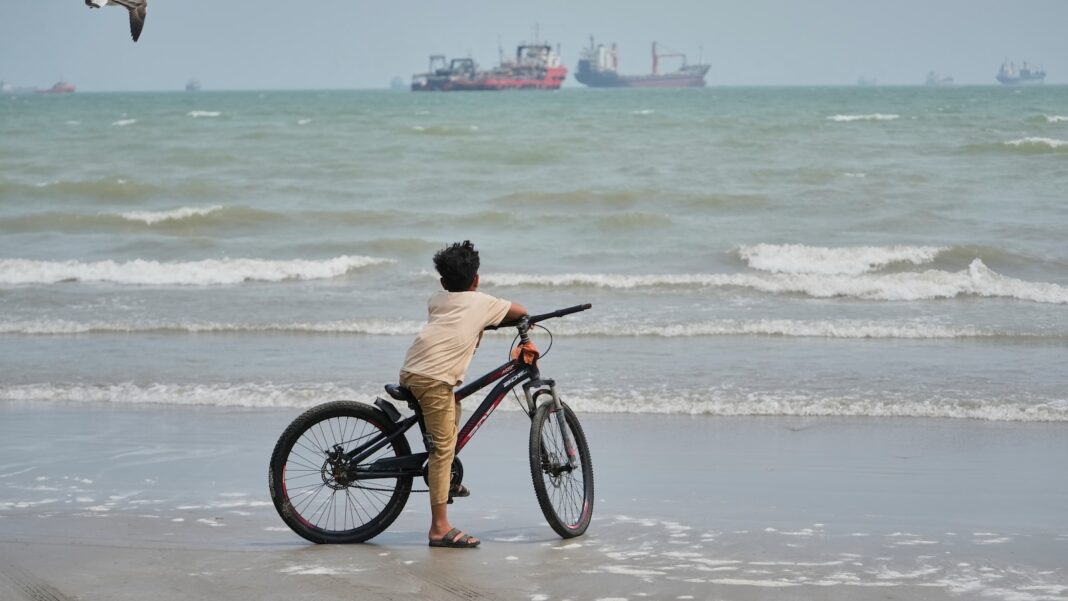
BANDAR ABBAS, Iran — In the Iranian port city of Bandar Abbas on the Strait of Hormuz, a waterfront once busy with boats, trucks and workers has fallen quiet. It’s a front line of the economic pain that the United States now hopes to intensify after six months of war.
The Associated Press visited the city shaken by new U.S. airstrikes targeting coastal areas in the past week, and found anger along with growing anxiety about simply getting by as a U.S. blockade of Iranian ports continues.
A taxi driver, Hamid Hajizadeh, said he does not understand Americans. “They are heroes in movies, but here they killed people in schools, wedding ceremonies and other places. They bombed roads and bridges,” he said.
In this city of over 700,000 people, residents have a closer view than almost anyone of events on the strait that have seized global attention. They say their location has brought little but danger and discomfort over the past half year.
Mohammad Torabian works at the dock providing services to passengers. Before the war, he said, as many as 50 trucks carrying food and meat would unload there every day. Now, with the U.S. blockade that’s aimed at keeping Iran from exporting its oil, much of the dock is empty.
“The business right now is terrible,” Torabian said. He estimated that about 500 people had been earning a living around the dock but “there is no job here.”
The fortunes of Bandar Abbas have long been tied to the sea and nearby Shahid Rajaee, one of Iran’s largest commercial ports. Shahid Rajaee has the capacity to handle 100 million metric tons of cargo a year, according to a report in July by Iran’s state-run IRNA news agency.
Iranian officials have sharply criticized the blockade, which the U.S. imposed in April and then imposed again after negotiations with Tehran on a path to end the war fell apart. Washington has since vowed more economic pressure over the strait, which is crucial to global shipping of oil, natural gas and related products.
Parliament Speaker Mohammad Bagher Qalibaf, the lead negotiator in talks with the U.S. that collapsed, warned earlier this month that an escalation of the blockade would be met with a military response.
In Bandar Abbas, the effects are spreading through nearly every layer of the economy, from ships and dock workers to customs-clearing companies and shopkeepers.
Mahsa Shojaei, an accountant with a customs-clearing company, said much of its business before the war involved importing rice, tea and coffee from India and Pakistan.
Now, Shojaei estimated that 80% to 90% of her company’s workload has disappeared. A business that might have handled around 100 customs-clearance files during a certain period now processes only about 10, she said. At the same time, the cost of bringing cargo through customs has risen.
The economic damage has spread beyond the waterfront, especially as Iran’s currency reaches record lows. In the retail markets, merchants said customers are disappearing as purchasing power deteriorates.
Mehrdad Jahangiri sells children’s clothing at a shop that supports both his household and his father’s. He said sales have fallen by about half compared to the same period last year.
“There are simply no customers,” Jahangiri said. “The market has become very quiet.”
The timing of the war was especially damaging for merchants. It began just before the Iranian New Year, Nowruz, traditionally one of the busiest shopping periods. Merchants rely on families to spend more than during ordinary months. The war wiped out much of that expected business.
Now another crucial shopping period is slipping away. In the weeks before schools reopen later in September, families traditionally buy new clothes for their children. This year, Jahangiri said, the usual crowds have barely materialized.
The downturn has become severe enough that the shop sometimes falls behind on rent and accumulates debts in the market, something he said had not happened before.
“People’s pockets are empty and incomes have fallen,” he said.
Asked whether his family had been forced to cut back on everyday expenses, Jahangiri’s answer was immediate. “Absolutely,” he said. “It has changed a lot.”
Other merchants have tried to adapt by offering discounts or allowing regular customers they trust to pay for goods in installments.
For people earning their living directly from the sea, the problem goes beyond the disappearance of business. They also must consider how far they dare to venture offshore.
Abbas Golzanaei, a motorboat driver who transports passengers to ships and other nearby ports, said that before the war he traveled as far as 30 miles (48 kilometers) for work.
“Before the war, business was good,” Golzanaei said. “Now I can’t go beyond seven or eight miles. The sea is not safe.”
That has left him with fewer passengers and less money. And “things are hard to find,” he said. “We have difficulty getting gasoline.”
Farther offshore, cargo vessels were silhouetted against the setting sun, suspended in uncertainty like Bandar Abbas itself, waiting to know when they can move again.