
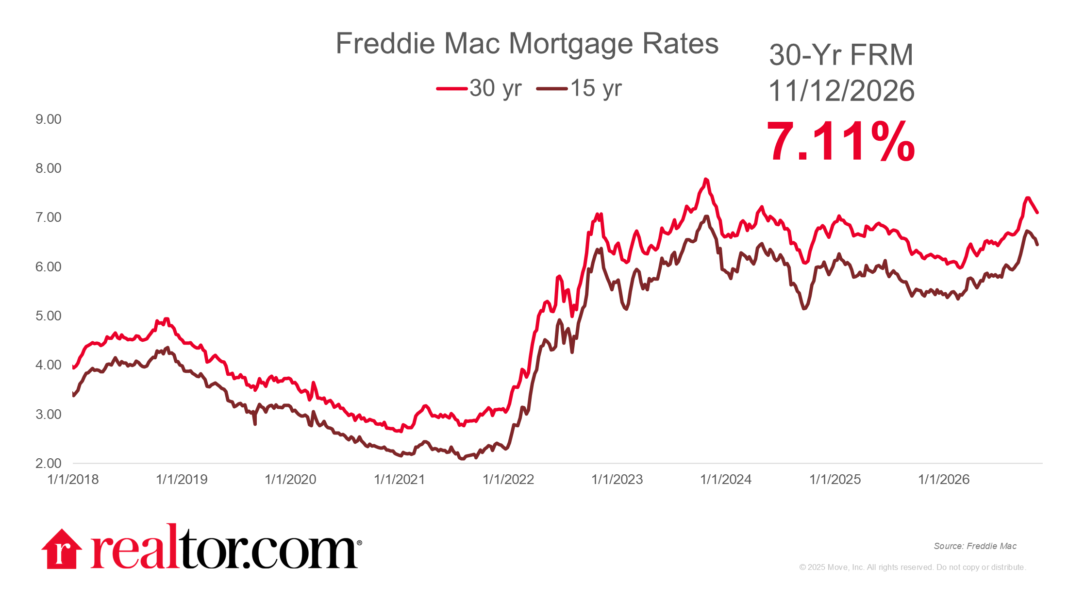
What happened to mortgage rates this week?
The Freddie Mac 30-year mortgage rate jumped 17 basis points to 7.28% this week, reversing four weeks of declines that had brought rates down to 7.11%, as the 10-year Treasury yield climbed back toward 5%. Hot inflation data and the persistence of the conflict in Iran placed upward pressure on bond yields and borrowing costs. The October CPI report came in above expectations on both the headline and core measures, cementing market expectations for a December rate hike and giving the 10-year little room to fall.
The debate has shifted from whether the Fed hikes in December to how aggressively it moves. That is a tough backdrop for mortgage rates heading into what is already a seasonally slow stretch for the housing market. Pending home sales fell to a record low in October, and existing home sales hit their lowest level since 2010, as the surge in rates through mid-October took its toll on buyers and sellers alike. Builder confidence has also fallen to a 14-year low, and permit activity dropped to its lowest level since the early days of the pandemic, signaling that the supply pipeline will face continued pressure in the months ahead.

What does this mean for the housing market?
For buyers who remain active, conditions offer some real advantages. With fewer shoppers in the market, competition has thinned, sellers have shown more flexibility on price, and active inventory continues to rise even as new listings have pulled back. The challenge is that until inflation cools enough to put mortgage rates on a durable downward path, affordability will remain the dominant constraint on the market.