
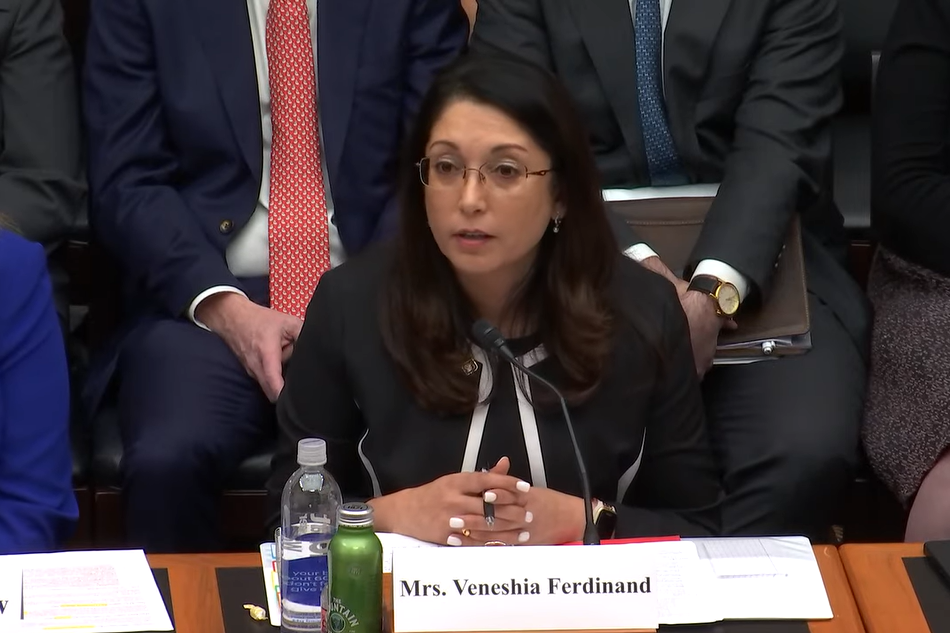
The Fair Credit Reporting Act is a critical consumer protection law that supports responsible lending, and policymakers should avoid changes that could restrict credit availability by reducing data accuracy or adding complexity, banker Veneshia Ferdinand told House lawmakers today on behalf of the American Bankers Association.
Ferdinand, who is assistant vice president and director of compliance policy at Simmons Bank, testified before the House Financial Institutions Subcommittee during a hearing on promoting credit access. In prepared remarks, Ferdinand emphasized that banks sit at the center of the credit reporting ecosystem as both users and furnishers of consumer information. She made the following points:
- Banks are important participants in the credit reporting system and work hard to ensure they are living up to their consumer protection obligations and providing the best customer experience they can;
- The more complete and accurate information in the credit reporting system, the better banks can manage risk and responsibly meet consumers’ credit needs; and
- Even well-intended policy changes can unintentionally increase costs and introduce process challenges that affect credit reporting accuracy and risk management, which ultimately impacts credit availability.
“Clear, consistent rules and realistic implementation timelines are critical to ensuring that compliance efforts translate into meaningful consumer protection rather than procedural complexity for banks,” Ferdinand said. “Laws and regulations that increase FCRA compliance costs without meaningful consumer benefits needlessly drive up the cost of credit and other bank services and make financial services more expensive.”
Ferdinand also noted that laws and regulations that ban reporting accurate, negative consumer information undermine the consumer reporting system and impede it from functioning as intended.