
Headline trends
- Charleston and Savannah both offer Southern charm aesthetics, with differing price dynamics.
- The entry point to luxury is $1.19 million nationally:
- Charleston: $1.96 million
- Savannah: $987,000
- Charleston has a population roughly twice as large, at 890,430, compared to 439,322.
- Charleston’s luxury market is deeper and more developed than Savannah’s.
- Luxury pace is similar in both markets and near national levels:
- Charleston luxury homes: 86 days on the market
- Savannah luxury homes: 86 days on the market
- National luxury benchmark: 88 days on the market
Southern charm
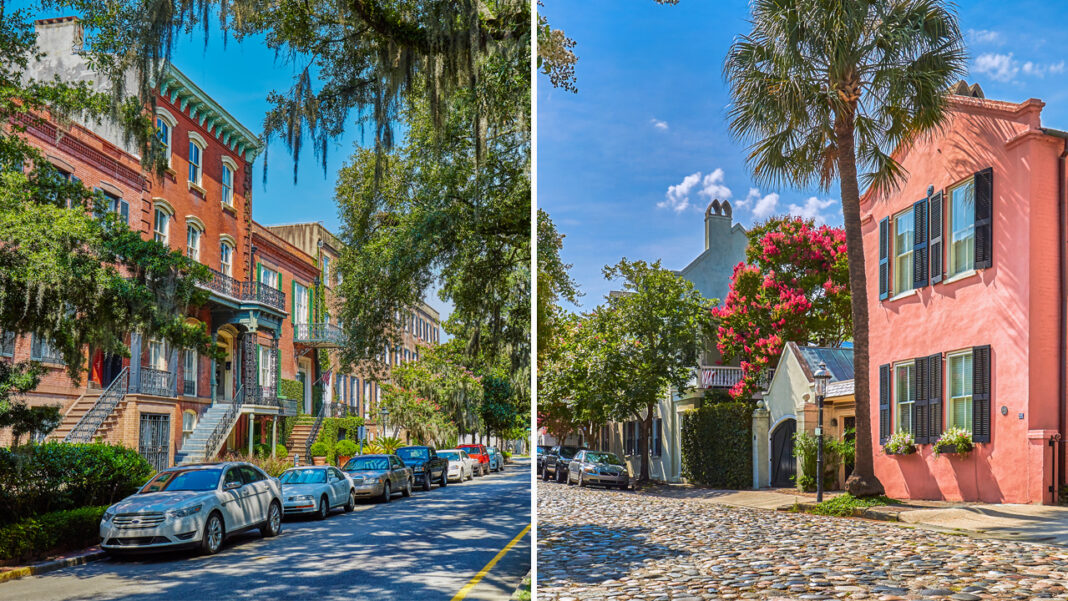
Southern charm typically brings to mind cobblestone streets, historic neighborhoods, walkable districts, live oak trees draped in Spanish moss, and a touch of the region’s hospitality. Charleston, SC, and Savannah, GA, are synonymous with Southern charm and often top the list of historic Southern cities. Both are defined by preserved architecture, coastal access, and a lifestyle appeal that continues to draw buyers seeking a blend of culture, character, and quality of life.
Their historic housing stocks, however, reflect different development eras. Charleston includes a larger share of homes built in the mid-1800s, reflecting earlier urban development. Savannah’s historic growth occurred later, with a greater concentration of homes built in the late 19th and early 20th centuries.
Yet beneath their shared Southern charm aesthetic, these two markets are operating at different points along the luxury housing curve. Charleston is a fully scaled luxury hub, with a deeper million-dollar inventory, a functioning ultraluxury tier, and pricing that sits above national benchmarks. Savannah, by contrast, remains an emerging luxury market, where high-end thresholds sit well below national norms and million-dollar listings represent a relatively thin slice of total inventory.
| Area | Million-Dollar Listing Count | Share of Million-Dollar Listings |
| USA | 117,115 | 12.0% |
| Charleston-North Charleston, SC | 706 | 19.7% |
| Savannah, GA | 194 | 9.2% |
Two coastal markets, two different luxury profiles
Charleston and Savannah share many surface similarities, but their luxury markets reflect vastly different underlying dynamics.
Charleston’s luxury market reflects structural depth and scale rather than niche concentration. While a million-dollar listing is not the definition of luxury, the roughly 20% of all listings priced at $1 million or more in Charleston signals how deeply higher-priced inventory is embedded across the broader market. This is well above the national share of 12%. At the same time, Charleston’s entry point to luxury sits at $1.96 million, nearly 65% above the national benchmark of $1.19 million, reinforcing its position as one of the South’s most established luxury housing markets.
By contrast, just 9.2% of Savannah’s inventory are million-dollar homes, placing it below the national share of 12% and signaling that seven-figure home prices remain a thinner, more segmented layer of the market. Savannah’s entry point to luxury sits at $987,000, 17% below the national level of $1.19 million, underscoring how differently luxury is defined locally across the two metros.
Relative to local medians, Charleston’s luxury threshold sits at roughly four times the typical home price, compared with about 2.5 times in Savannah. That contrast underscores a wider range at the top of Charleston’s housing market, while even the higher-end homes in Savannah remain more closely aligned with the broader market.
Despite these structural differences, luxury pace remains similar in both markets and near national norms. Luxury homes in Charleston and Savannah each spend a median of 86 days on the market, compared with a national luxury benchmark of 88 days. This indicates that high-priced homes continue to move at a steady pace in both metros, even as pricing tiers and market depth diverge.
Market behavior diverges
Charleston has long operated at a structurally higher luxury price tier than Savannah, but the two markets experienced very different COVID-19 pandemic-era cycles.
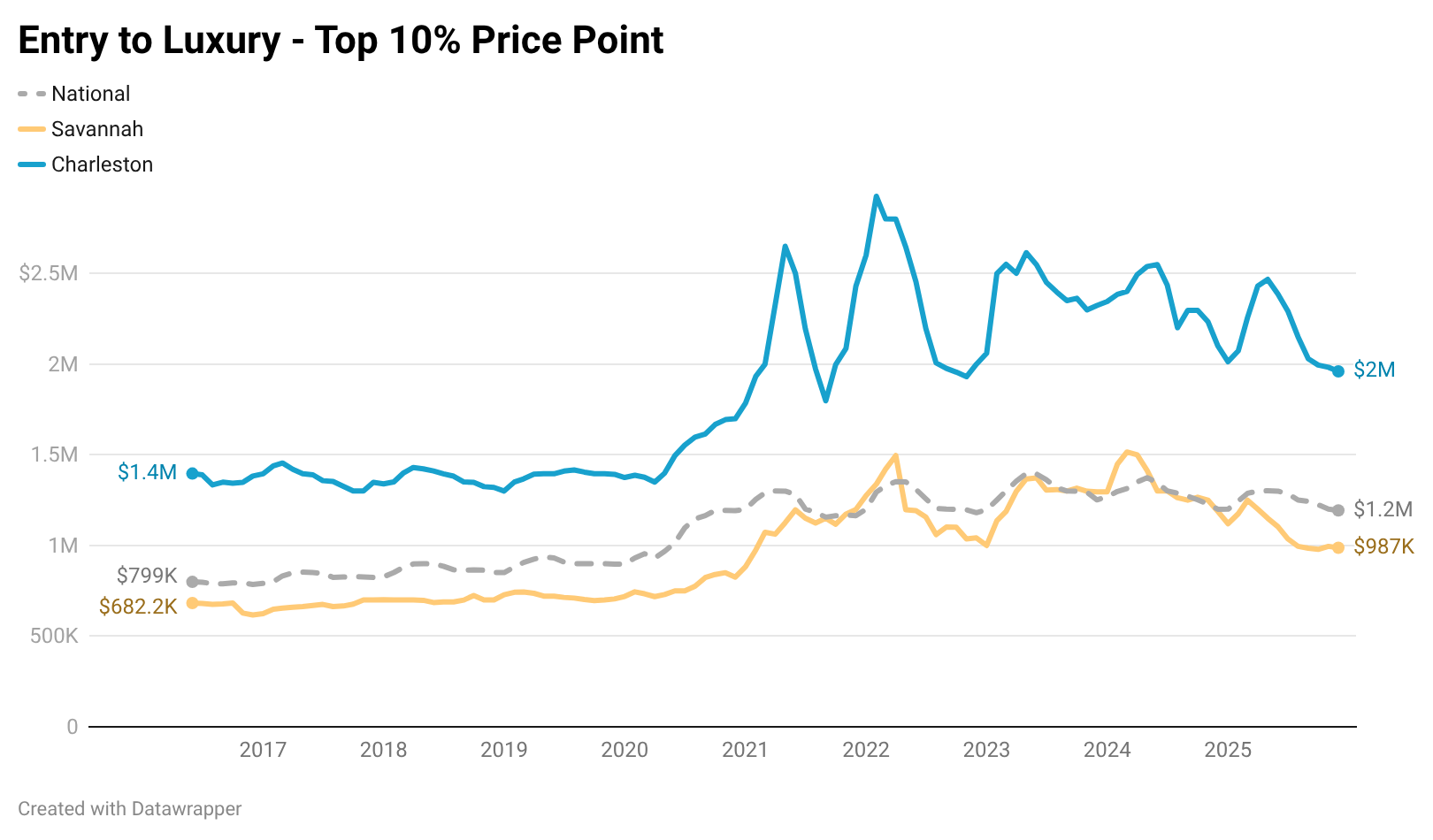
In 2016, Charleston’s entry point to luxury already stood near $1.40 million, roughly double Savannah’s level and well above the national benchmark. From that higher starting point, Charleston’s 90th percentile surged during the pandemic boom, peaking near $2.9 million in early 2022. Since then, prices have worked through a pronounced recalibration, with the luxury threshold settling back to roughly $1.96 million by December 2025. This recalibration was also seen in the broader Charleston housing market, though at a smaller magnitude. Even after that sharp correction, Charleston’s entry point to luxury remains above the national level of $1.19 million.
Savannah followed a more compressed cycle. After rising gradually from a baseline near $680,000 in 2016, Savannah’s 90th percentile climbed into the $1.5 million range in 2024, just above the national benchmark, before correcting. By December 2025, Savannah’s entry point to luxury had fallen to $987,000, placing it back below the national benchmark.
Together, these price paths highlight two vastly different luxury markets. Charleston reflects a higher-priced luxury tier that experienced a sharper postboom correction and a longer recalibration phase. Savannah reflects a later stage breakout followed by a more compressed reset, consistent with a thinner and more price-sensitive luxury segment.
Charleston’s most expensive ZIP codes
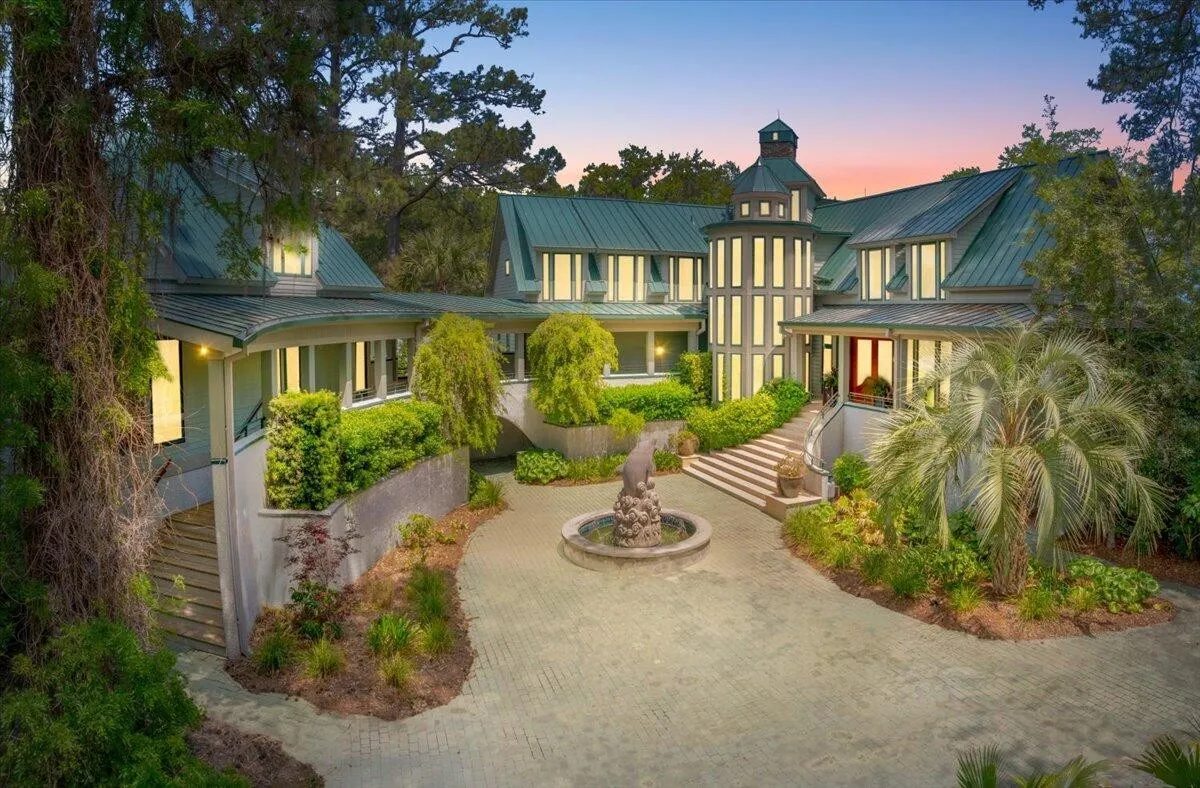
(Charleston Ultraluxury Home)
| Rank | ZIP Code | Area | Median Listing Price | Median Square Feet |
| 1 | 29482 | Sullivan’s Island | $4,998,000 | 3,919 |
| 2 | 29451 | Isle of Palms | $2,298,250 | 2,480 |
| 3 | 29401 | Charleston | $2,055,000 | 2,225 |
| 4 | 29487 | Wadmalaw Island | $1,824,963 | 3,898 |
| 5 | 29464 | Mount Pleasant | $1,212,055 | 2,099 |
Charleston’s most expensive ZIP codes underscore the depth and geographic diversity of its luxury market, spanning barrier islands, historic urban cores, and low-density island communities.
At the very top sits Sullivan’s Island (29482), where median listing prices approach $5 million. Known for its beachfront estates, historic charm, and limited developable land, Sullivan’s Island represents Charleston’s ultraluxury anchor. Homes here offer a blend of coastal access, privacy, and architectural character that places the ZIP code firmly in the upper tier of Southern luxury markets.
Beyond Sullivan’s Island, Charleston’s luxury inventory fans out across multiple submarkets. Isle of Palms (29451) and downtown Charleston (29401) both post median listing prices above $2 million, reflecting demand for oceanfront living on the one hand and walkable historic neighborhoods on the other. Wadmalaw Island (29487) adds a more rural luxury profile, with larger lots and estate-style properties, while Mount Pleasant (29464) rounds out the top tier as a high-demand suburban luxury enclave near luxury amenities and coastal access.
These ZIP codes illustrate how Charleston’s luxury market is anchored by multiple premium corridors, supporting a functioning ultraluxury tier that offers shoppers multiple options and a broad base of high-priced inventory.
Savannah’s most expensive ZIP codes
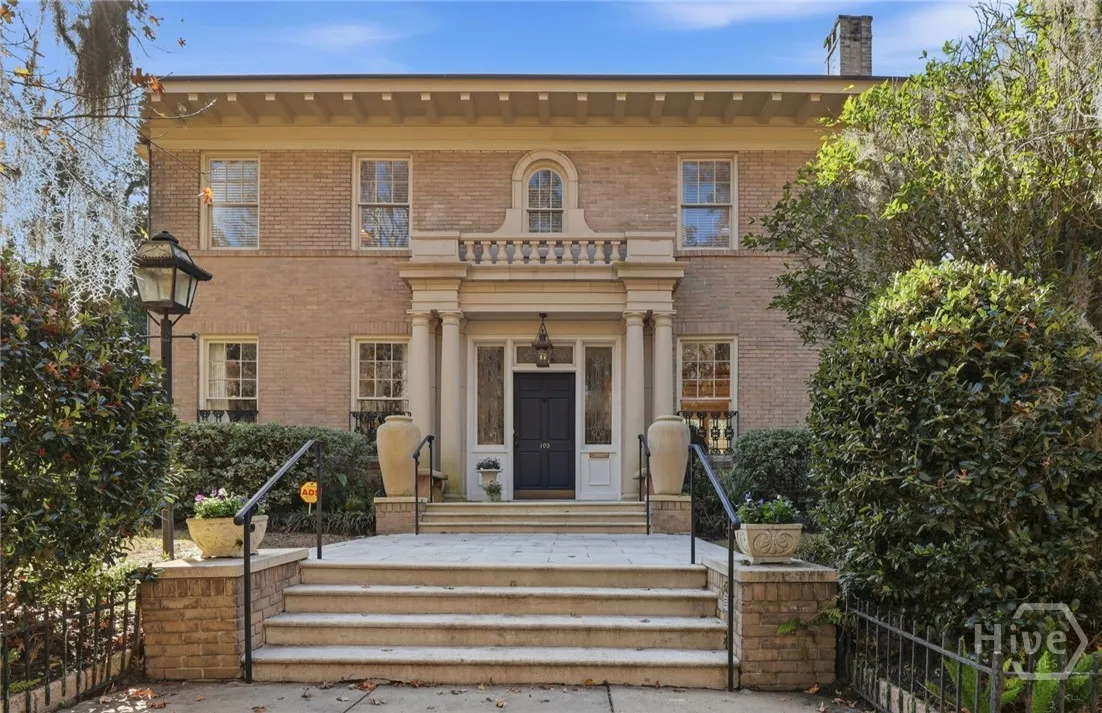
(Savannah Luxury Home)
| Rank | ZIP Code | Area | Median Listing Price | Median Square Feet |
| 1 | 31411 | Savannah | $936,975 | 2,915 |
| 2 | 31328 | Tybee Island | $771,750 | 1,578 |
| 3 | 31401 | Savannah | $731,000 | 1,694 |
| 4 | 31324 | Richmond Hill | $472,811 | 2,476 |
| 5 | 31405 | Savannah | $463,750 | 2,045 |
Savannah’s most expensive ZIP codes operate at a much lower price band than Charleston’s, reinforcing the thinner and more localized nature of its luxury market.
Skidaway Island (31411) sits at the top of Savannah’s pricing hierarchy, with median listing prices just below $1 million. Known for its gated communities, golf courses, and waterfront estates, Skidaway Island represents a more traditional luxury area in a region with a flatter price range.
Tybee Island (31328) and Savannah’s historic core (31401) follow closely behind, reflecting demand for coastal proximity and preserved architecture. These ZIP codes capture Savannah’s lifestyle appeal, but their median listing prices remain firmly below the million-dollar mark, underscoring how differently luxury is defined locally across the two metros and how higher-priced homes are more blended into the broader housing stock.
Richmond Hill (31324) and Savannah’s 31405 ZIP code round out the top five, offering larger homes at lower price points, often in suburban or semirural settings. These areas reflect a more space-driven form of premium housing, rather than a concentrated ultraluxury market.
Savannah’s most expensive ZIP codes reflect a luxury market defined by charm and lifestyle appeal rather than extreme pricing, with median values concentrated below $1 million, where higher-priced homes are more mixed into the broader market rather than set apart in distinct enclaves.
The takeaway: Two Southern coastal cities, two very different luxury markets
Charleston and Savannah may share a Southern coastal identity, but their luxury housing markets reflect two vastly different structural realities.
Charleston has matured into a fully scaled luxury hub, with pricing that sits well above national benchmarks and a top tier that is clearly segmented from the broader market. Even after a sharp post-pandemic recalibration, Charleston’s entry point to luxury remains near $2 million, reinforcing its long-term price leadership and the structural separation between the typical home and the top of the market.
Savannah, by contrast, reflects a luxury market defined more by lifestyle appeal and historic character than by extreme pricing. Its entry point to luxury sits below the national benchmark and remains priced much closer to the broader local housing market, with a lower and more compressed price ceiling. Rather than functioning as a sharply segmented tier, luxury in Savannah behaves more as an extension of the broader housing stock.
For high-end buyers, Charleston offers a scaled Southern luxury ecosystem with pronounced price stratification and long-term pricing power. Savannah offers relative accessibility and charm-driven appeal, but its luxury market remains more tightly tethered to local affordability and broader market conditions.