

December Jobs Report Shows Slower Hiring but Improving Labor Market Signals
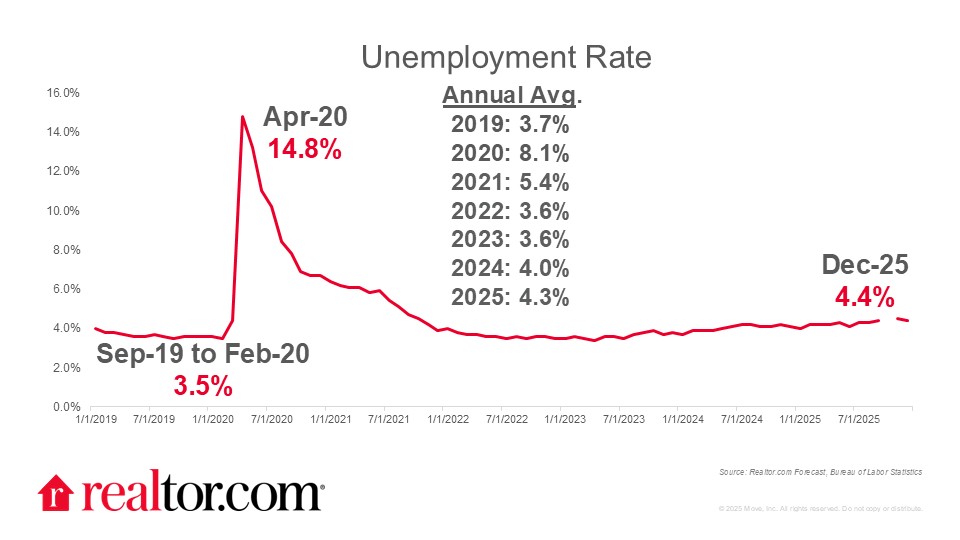
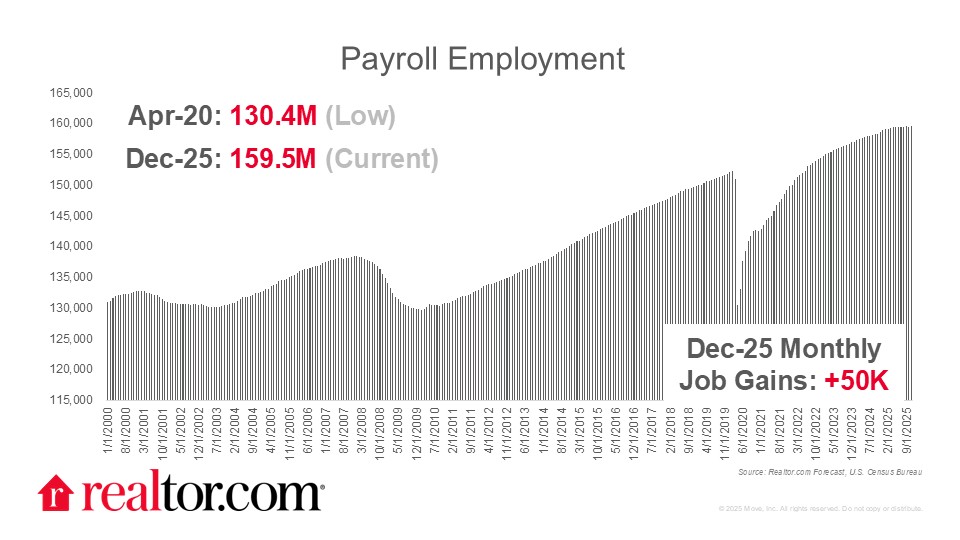
The December jobs report delivered a mixed, but informative snapshot of how the labor market closed out 2025. Payroll growth came in at 50,000, a softer-than-expected headline that reinforces the view that hiring momentum remains weak. The private sector added just 37,000 jobs, while government employment contributed 13,000, and earlier months were revised lower amid lingering shutdown-related noise. On the other hand, the unemployment rate fell to 4.4% (4.38% unrounded) from a worryingly high 4.6% in November (which was revised down to 4.5%). Wage growth firmed, with average hourly earnings up 3.8% year over year. Overall, today’s messy report helps level-set expectations for 2026 for a low-hire, low-fire labor market that is still waiting for clearer signs of renewed momentum.
For the Fed, the Data Reinforce a Pause Heading Into Early 2026
For policymakers, this combination all but confirms a Fed on pause later this month. The drop in unemployment and firm wage growth reduce any urgency to cut rates, even with hiring still modest. With inflation and real earnings data still ahead next week, the Fed is likely to remain in wait-and-see mode, but today’s report makes a January cut extremely unlikely unless inflation comes in shockingly low.
For Housing, Labor Stability and Wage Growth Matter — Not Just Rate Cuts
For the housing market, implications are also mixed but more positive. Mortgage rates have stabilized in recent weeks, and today’s data remind us that the foundation of housing demand is labor market stability and real income growth, not just near-term rate cuts. The pickup in real wage growth at the end of 2025 is a positive signal for workers and prospective homebuyers alike, even as affordability weighs on activity. As our December housing data showed, the market ended 2025 quietly and unevenly across regions. Looking ahead to 2026, a steadier labor market with fewer downside risks would support household confidence and first-time buyer demand, especially as housing affordability has emerged as a priority for the administration with more creative policy proposals on the way.
Subscribe to our mailing list to receive updates on the latest data and research.