
What happened to mortgage rates this week?
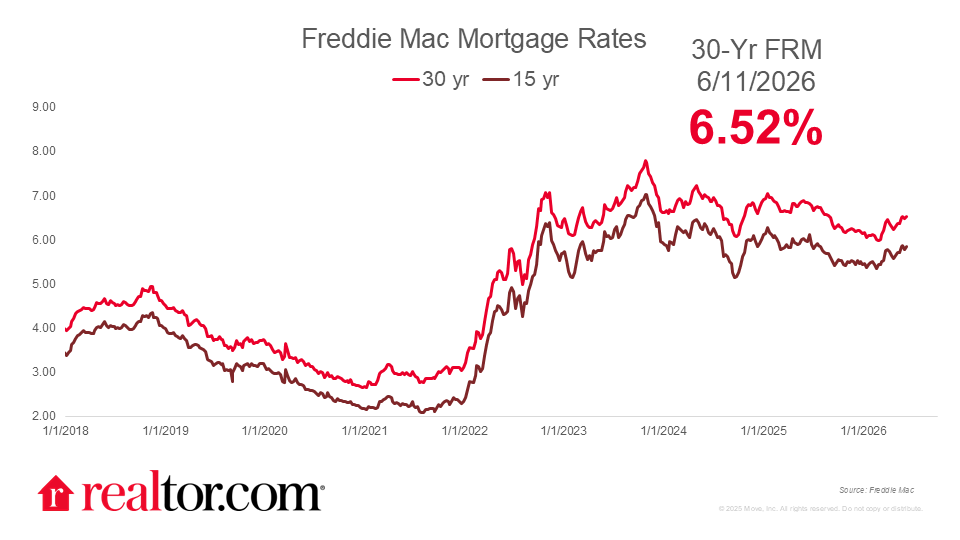
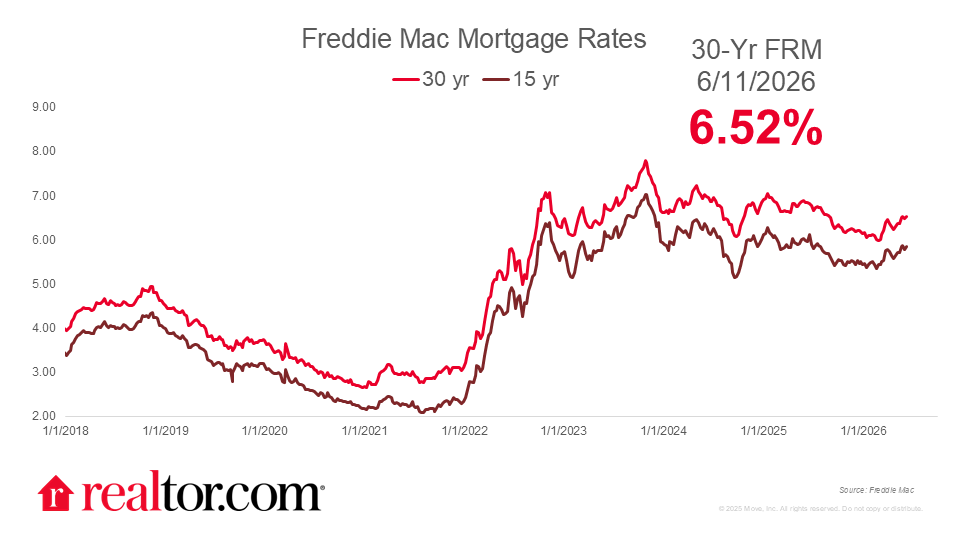
The Freddie Mac 30-year mortgage rate increased by 4 basis points to 6.52% this week following a stronger-than-expected jobs report and persistently elevated inflation. On the employment side, a resilient labor market has dampened investors’ hopes for near-term rate cuts, while a three-year high in headline CPI makes a Fed pause next week nearly certain. What began as a question of when the Fed would cut rates has quietly shifted—ongoing global tensions and rising energy prices have prompted some to wonder whether a rate increase may be back on the table. Fortunately, core inflation rose only modestly, suggesting that higher energy prices have not yet spilled into other major categories—except for airfare.
What does this mean for the housing market?
Recent volatility in mortgage rates has undoubtedly created hurdles for prospective homebuyers. Yet despite rates remaining higher than expected, buyers and sellers are recalibrating and responding to the uncertainty in kind. Sellers are adjusting prices to attract demand, with the median asking price posting its steepest year-over-year decline in Realtor.com data since 2017. Buyers, in turn, are seizing the opportunity, pushing pending sales up for a sixth consecutive month. The market has proven more resilient than many anticipated—existing-home sales climbed to a five-month high in May.
However, if inflation continues to outpace wage growth—eroding purchasing power alongside still-elevated mortgage rates—household budgets will come under increasing pressure, posing a meaningful drag on housing demand heading into the summer.