
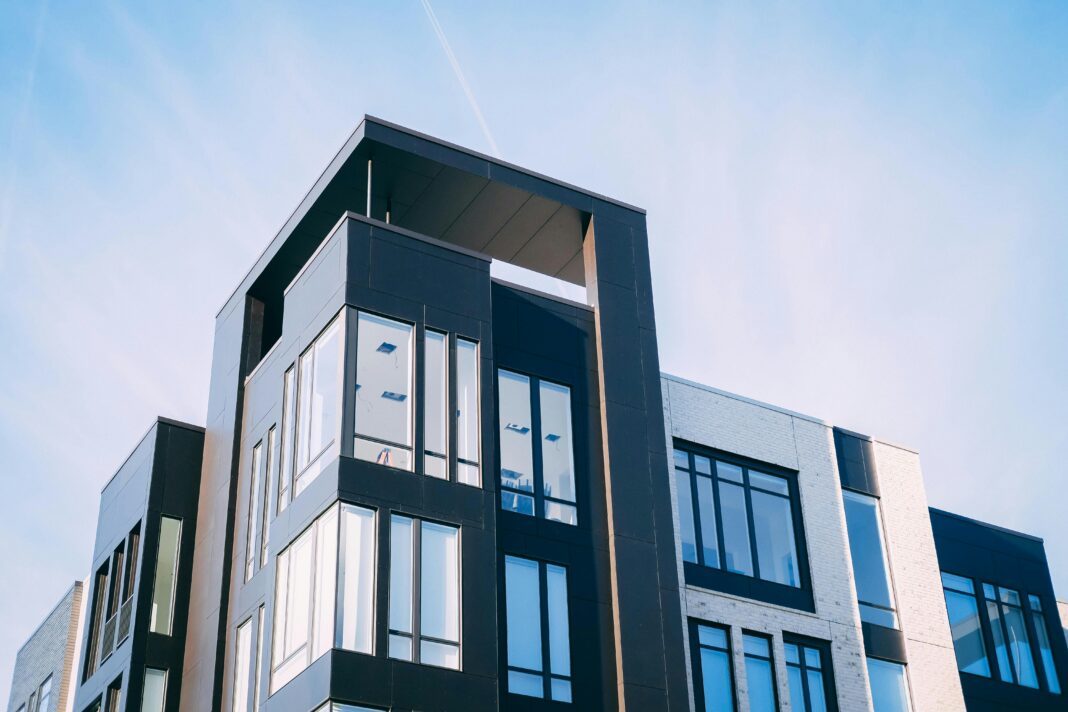
preJust a few years ago, real estate investors were salivating over apartment buildings as rents increased at a historic pace. But as persistent oversupply collides with the latest surge in borrowing costs, multifamily is out of favor, at least for now.
Increasing distress is now seen as inevitable for apartment owners that had been hoping for interest rates to come down as lenders pivot toward asset classes that are delivering better returns, executives said last week at Bisnow’s National Commercial Real Estate Finance event.
Around $1.8T of debt is set to come due for multifamily owners in the next decade, with as much as $757B due between now and 2028, The Wall Street Journal reported.
“I’m not saying it’s going to get as bad as office,” Rialto Capital Head of Special Situations Investments Joe Bachkosky said. “But it’s creating a challenge for an asset class that has been probably one of the stronger-performing asset classes over the last 25, 30 years.”
Higher borrowing costs are already challenging owners that took out loans between 2020 and 2022. Interest rates were near zero at the time, and rents had shot up by double digits in cities across the Sun Belt. That dynamic has flipped — apartment prices fell nearly 5% between August 2025 and August 2026, according to MSCI. Overall CRE prices were flat over the same window.
Without solid returns, multifamily is “tough,” Clarion Partners Managing Director and Head of U.S. Transactions Gary Rufrano said onstage at the Marriott Marquis Times Square.
“People now need to see some demonstrated performance and stop seeing troubles in the ground for people to get a lot more conviction in multi,” he said.
:quality(75))
Bisnow/Ciara Long
Gibson, Dunn & Crutcher’s Matthew Gibbons, Meridian Capital Group’s Benjamin Nevid, Rialto Capital’s Joe Bachkosky, Oxford Properties’ Andy Field and Steiner Capital & Consulting LLC’s Jeffrey Steiner onstage at Bisnow’s National Commercial Real Estate Finance event
Stubborn inflation and soaring government debt have pushed the 10-year Treasury yield — the benchmark for most commercial real estate borrowing — past 5.3%, its highest level since 2022. The increase is happening as commercial and multifamily mortgage delinquencies have been inching upward across most lender types, according to the Mortgage Bankers Association’s most recent data.
The Federal Reserve’s interest rate hike affirmed that interest rates aren’t coming down anytime soon, which changes the tenor of conversations between lenders and borrowers.
Even for properties that are performing well, if they have debt issued before 2023, they could be at risk of foreclosure, Oxford Properties Group Senior Managing Director of Investments Andy Field said.
“The day-to-day is great. Maybe there’s some fundamentals that are going against you in the market. But when there’s a maturity, there might be an event,” he said.
:quality(75))
Bisnow/Ciara Long
Ryan’s Steve Thompson, Clarion Partners’ Gary Rufrano, Wafra’s David Hamm, Legal 1031 Exchange Services’ Paul Faglione and Hunton Andrews Kurth’s Matthew Scoville
While rents have soared in New York and San Francisco over the past year, the fundamentals of multifamily ownership in the rest of the country are “pretty painful,” Wafra Senior Managing Director David Hamm said.
Oversupply has been eating into demand in some markets, particularly in Sun Belt cities. Meanwhile, operating costs have been rising across the board for years, increasing nearly 37% between 2019 and 2026, from $6,950 to $9,510 per unit, according to Harvard University’s Joint Center for Housing Studies.
“Rents didn’t grow as much as expenses,” Bachkosky said. “You need to put capital in. Not to increase your rents — you just need to put capital in to keep your rents where they are.”
Rialto has long been one of the most active special servicers of CMBS loans, tasked with working out problems with borrowers that can’t pay back their mortgages when they mature.
A third of the loans that have recently transferred to Rialto’s servicing platform were multifamily, up from virtually none a decade ago, Bachkosky said. Rialto now has $14B of multifamily loans in need of workouts.
“It’s so funny because three or four years ago, apartments were the golden child,” said Steve Thompson, a principal at tax specialist Ryan. “They could do no wrong, and just to see how much that has shifted.”
Roughly 8% of multifamily CMBS loans were delinquent in August, up from 6.5% a year ago, according to Trepp. Only office has a higher rate of delinquency among the major property types.
Because multifamily is the largest asset class and there is still a nationwide housing shortage, investors are still keen to invest in apartments. Bachkosky said that might be misguided in this environment.
“More unusual about this cycle is multifamily is going to have a difficult go,” he said. “There’s still a lot of capital that is ready to invest in [multifamily], not recognizing some of the issues that it’s had.”
Those sentiments were echoed on a separate panel by GoldenTree Asset Management principal and Head of Real Estate Sam Friedland, who questioned the discipline of lenders underwriting apartment loans today.
“A lot of the people making those loans are not really thinking about the risk they’re signing up for at the leverage points they’re providing,” he said.
:quality(75))
Bisnow/Ethan Rothstein
Citrin Cooperman’s Kevin Burns, PACE Loan Group’s Robbie Pinkas, Affinius Capital’s Hailey Ghalib, Northwind Group’s Ran Eliasaf, GoldenTree Asset Management’s Sam Friedland and Integritas Capital’s Stephen Palmese
Liquidity issues have already plagued pockets of the multifamily market, especially syndicators that cobbled together equity to buy huge portfolios at high leverage points. Last month’s interest rate hike could lead to another series of firms wiping out, Northwind Group founder and Managing Partner Ran Eliasaf said.
“I think we’re going to see a second wave now of these Tides [Equities],” he said, referring to the value-add syndicator that defaulted on loans covering a 30,000-unit Sun Belt multifamily portfolio as interest rates climbed in 2023.
“They hoped the rates will go in a different direction,” Eliasaf said of many multifamily investors. “They’re not going to be able to support their properties where the rates are going right now. It’s going to be a very tough market.”
In the meantime, investors are finding a plethora of options that are delivering better short-term returns.
“You can love it or hate it, but office has been fully repriced,” Hamm said, adding that retail has been his sovereign wealth fund-backed investment firm’s favorite asset class for the past few years.
Industrial is also turning back into a success story after a period of overbuilding, Rufrano said. Investors were spooked last year when President Donald Trump announced his tariff policy, but consumers have yet to pull back on spending.
“People still love to sit on the couch and buy goods,” he said. “As long as that happens, industrial is going to be in demand.”
Despite multifamily’s troubles today, investors still believe it will come back in vogue. The sector has less long-term volatility than other asset classes, Meridian Capital Group Senior Managing Director Benjamin Nevid said, because people always need somewhere to live.
However, squeezed between high borrowing costs, debt coming due and investor misgivings about how multifamily owners are presenting their fundamentals, the sector could be in for a bumpy ride over the next few years.
“We like it long-term,” Hamm said. “We just don’t like how it’s priced today.”